
Listening to scissors
watch your ears

Dear Listener,
Have you ever switched price tags on some thing? To bring it into your price range maybe? I was at the thrift shop across the street not long ago when I encountered a thing of interest. In the yard was a four foot saw with a rusted bow handle. The blade is stretched between the ends of the handle and I immediately see it being bowed like a cello. I pull the saw off the rack and begin plucking the blade. After inspection I decide that this object has potential but my inspection found no price tag. I wander the yard looking for a person to price it. Near the office I find an employee wearing a high visibility vest. The man is engaged in a conversation with another fellow in civilian clothing so I stand near them to await my turn. The employee holds a clipboard that holds papers with rows and columns and notes in pen scrawled over. The highly visible man gestures, tapping his hand against the board while I lean in to ascertain the nature of the conversation. I assumed the two men had a sales-client relationship but now I’m not sure. They are talking logistics and the price of something, each of them occasionally tossing a serious glance in my direction. Thoughtful glances that look through me. I begin moving, tapping on the saw and twirling it, held between my hand and the ground. My antics attract no attention so I resort to raising my hand like some school child. The high vis man sees this raised hand and raises a finger in response, a gesture asking for patience. I put my weight on the rusted bow saw and stare at the rack of oddities where I found it. My eyes examine rakes, metal rods, dowlings, brooms, broom handles. Next to that are shelves holding a variety of door knobs.
A drip falling off the roof creates a rhythm when it lands on a metal can. I pan the yard and when my gaze returns to the office the two men are gone. Then I spot them walking toward the back lot, where items are dropped off. Now I feel slighted, it seems I’m unimportant. I consider becoming frustrated but quickly wave it off deciding that I’ve been given license to price the saw myself. I carry the saw over to the door behind me and enter the thrift store interior. Inside I root around in the tool section looking at price tags. I pull a tag from an old monkey wrench then stick it to the saw before taking it to the front counter.
“ Ooh. That’s a good price” The lady behind the counter is too excited
I thought it was a bit daring to put a price of five dollars on a four foot bow saw but I dared. I don’t want to pay too much, I might even donate it back to the store when I’m done playing with it.
“ What are you going to cut with it? Something big I guess ” She eyes the blade with its long teeth.
“I’m not going to cut anything actually, I plan to bow it like a cello and see what sort of sound it makes”
The cashier pauses to give me a direct, serious look.
“You’re the guy who was in here recording those old sewing machines”
“ Yeah, that’s right, that was me “
I’m working on my technique, I probably have better clips but that one has the most cats in it. Anyway that’s my new saw that I basically stole from a charity thrift store. It’s not my habit to reprice like that. Usually I pay whatever is asked or leave it, don’t like to haggle. Anyway I’ve learned some things about saws as a result. For instance there are several different tooth configurations these sort of saws have. The blade in this saw is called “champion tooth”. I find it a charming tooth. This cross cut blade is meant for logs so it’s tooth is coarse and, as it travels, it will turn two millimeters of material to dust. Those missing two millimeters are the cost of separating the one log into two.
More often my concern is with a much finer blade. I work with razors, cutting materials on a glass surface. Paper, foamcore, laminated adhesive vinyl cut with nine or eighteen millimeter snap off blades. I continuously snap the blades for a fresh edge because, against the glass the razor dulls quickly. Most of the work is quadrangles defined by crop marks. Place the ruler with a mark at each end and draw a line between them with the razor. Sometimes there are no marks, in which case the line of the prints edge is used and a sliver of ink is taken off the sides. Cut at the precise boundary between what you want and what you don’t want. Creation through separation or removal. In this way large sheets of printed material are turned into many small sheets of printed material. Those sheets are then mounted to substrates like foamcore, corroplast or aluminum composite. The results are used for advertising, civil service, giant cheques with dry erase laminate or parking prevention signs.
Blade sharpness is especially critical when cutting things like paper, because it wrinkles and tears easily, or strong polyester materials like anti graffiti laminate. Also a fine edge is required to float a knife over adhesive vinyl without cutting the backing paper. I find myself ever concerned with sharpness, ever replacing blades in search of a finer edge. I’ve cut my hands many times to be sure, my fingers have been wrapped in bandages or marked with red lines. Still I dream of gray razors with shining edges sliding between crop marks creating a clean separation. An edge so exact the pieces appear unaltered until they are pushed apart. I see a macro view of a fibers being cut, smooth surfaces left on either side of the blades path. Then, at the molecular level, atoms are severed from each other and finally the atoms themselves are divided. But that’s the territory of mutually assured destruction.
If you are adverse to sharp things you should probably Not watch this clip. I mean you! Or watch it between your fingers.
I was given a look of pause when I asked to take the jar of old blades home but no question as to what I was going to do with them. I’m at a point in my life where I just always ask about that stuff, Grist for the mill you know?
Recently, in a store, sort of a general store, maybe a mercantile, in search of sound objects. I poke through a garden section and into the stationary section. On discovering a jar of scissors I take them out one by one to test their sonic qualities. When listening to scissors you have to watch your ears, so I listen as close as I dare. Each has its charm but one stands out with an aged, well worn character, textured tone. I run my thumb along the blades. They feel sharp despite the aged appearance of the instrument. I notice that, when closed, the blades touch at the tip and base while in the center is a narrow crack in the shape of a long ellipse. It’s seems that one or both of the blades have been bent in a slight arc. Being bent doesn’t seem great for cutting but I like the way they sound so I walk them up to the counter.
“ It looks like the blades of these scissors are slightly bent, I still want them though because I like their sound.” I proclaim. Is trying to haggle down the price ?
“ Oh no they’re meant to be like that” The bespectacled sales clerk pulls her lips into a polite grin. “ If you watch them the blades are made so that they touch only at one point as they close. They are very agile. They’ve been sharpened, would you like a piece of paper to try them with?”
I express my amazement at the art of scissor engineering though I decline to test my purchase on a page. I’m not sure why. I pay and leave.
As I walk away to my next destination I picture two arced blades agape, at the zenith of their cycle, slowly closing on a sheet of plain white paper. Their path toward the apex is a winding one accompanied by a soft crackling as the paper fibers are severed. The instrument is agile, capable of tight course changes, two fine blades touching at one point, prying the page apart. It continues endlessly forward drawing a waveform of changing amplitude and frequency. Then the blades open and remain open proceeding onward in a line through the thin white plane.
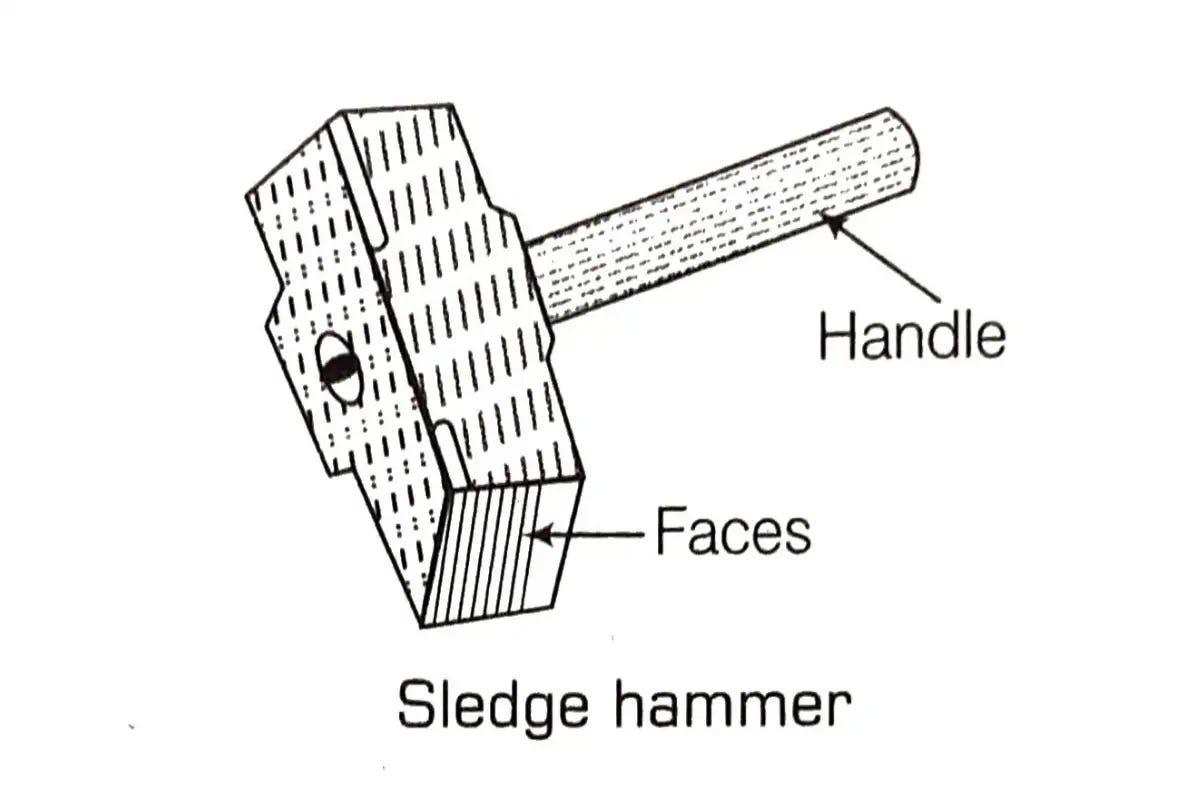
While I’m passing the same charity thrift store where I repriced the saw, sounds of destruction can be heard. Smashing, scattering of shards, cracking of wood and a hollow metal pounding. Ripples of excitement coarse through me. My place is just across the street so I run home and return with a stereo field recorder. Entering the parking lot I see two shipping containers with one end open. Across from them is a pile of old furniture, plates, a mirror and a barrel. In the barrel are crow bars, golf clubs, baseball bats and sledge hammers. In the shipping containers are people using things from the barrel to destroy things from the pile. In one container two high school girls are wearing lab coats, gloves and face shields while brandishing a sledge hammer and a baseball bat. The sledge is used on a set of dresser drawers and the bat is repeatedly swung against the remains of a television set. Not satisfied with the TVs pulverized state the girl brings the bat down over and over, loosing herself in the act. Having finished with the TV she approaches a sheet of glass laid against the container wall at an angle. Leaning over, holding the bat near its end she taps the middle of the glass which cracks into three pieces then collapses to the floor. In the other container a man sweeps glass shards from the floor into a bin at the end.
They call it a smash room, an empty shipping container into which objects are placed and for a small donation you can smash those objects with the implement of your choice. Objects range from ceramic knick knacks and dinnerware to TVs and dresser drawers. I can appreciate the excitement and release of smashing things like that. I imagine myself taking a golf club to a set of sherry glasses. Making glass dust of them one stroke at a time. I think it would sound neat in the container. At the same time it does seem like a bit of a waste, wanton destruction that seems indulgent. I guess the stuff was destined for a landfill anyway and the money goes to charity. Destroying things in the name of Habitat for Humanity. I like the irony of that, in fact I think the whole thing is alright based on it’s general absurdity.
Ever yours
D. Konstrucktid
P.S. Begin with a fine blade that can separate, without losing material, the useful from the non. Also a blade agile enough to carve the path of the useful. Bring objects of yesterday that no longer function, or never did function to a place of deconstruction. There, deconstruct them using baseball bats, sledge hammers and golf clubs. The important bit is that you yourself take an active role in the disassembly of these objects, also that you stay well protected.
P.P.S. I have a Leica M3, made in nineteen fifty nine, and it still functions fantastic!